Government Blocks 242 Betting Sites Under New Gaming Framework
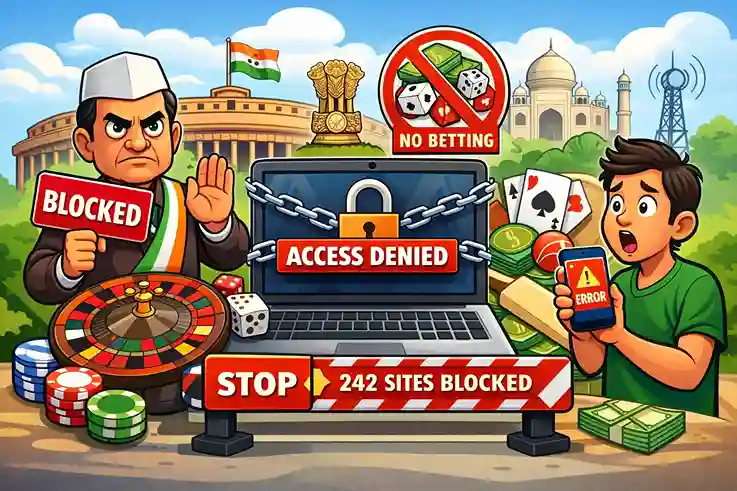
India’s Ministry of Electronics and Information Technology ordered internet service providers to block access to 242 betting and gambling websites this week, marking one of the more substantial enforcement actions we’ve seen since the country formalized its online gaming regulations. The move represents the government’s ongoing effort to distinguish between what it considers legitimate skill-based gaming and prohibited real-money gambling operations.
At https://its55club.com/, we’ve been tracking India’s regulatory evolution closely, and this action fits a pattern we’ve observed since the country introduced its online gaming framework in 2023. The blocked sites primarily offered sports betting, casino games, and other forms of gambling that fall outside India’s narrow legal definition of permissible online gaming. What’s notable here isn’t just the number-242 is significant-but the systematic approach the government appears to be taking.
The enforcement mechanism itself relies on coordination between the IT ministry and internet service providers, which means the blocks happen at the infrastructure level rather than through individual prosecutions. This approach allows for broader reach but also raises questions about how effectively these blocks function in practice, given the ease with which determined users can circumvent geographic restrictions.
The regulatory signal behind the numbers
This enforcement wave matters because it demonstrates India’s commitment to actively policing its online gaming boundaries, not just establishing them on paper. The country has taken a deliberately cautious stance on gambling, maintaining prohibitions on most forms while carving out exceptions for games it classifies as skill-based. That distinction has created a complex regulatory environment where companies must navigate carefully between what’s permitted and what triggers enforcement action.
For operators serving Indian users, this action clarifies that the government intends to enforce its framework with tangible consequences. The blocking of 242 sites sends a message that regulatory compliance isn’t optional, and that the government has both the will and the mechanism to act against platforms it deems non-compliant. We’ve seen similar enforcement patterns in other markets, but India’s approach is particularly noteworthy given the size of its potential gaming market and the ongoing debate about how to regulate it effectively.
The timing also matters. As India’s online gaming industry continues to grow-particularly in fantasy sports and skill-based card games-the government appears intent on maintaining clear boundaries around what it won’t permit. This creates a more defined operating environment, even if that environment remains restrictive by global standards.
How we interpret this move
Our view at https://its55club.com/ is that this enforcement action reflects India’s broader strategy of controlled market development rather than outright prohibition or open liberalization. The government seems to be pursuing a middle path: allowing certain forms of online gaming while actively suppressing others. Whether this approach proves sustainable long-term remains an open question, particularly as user demand for online betting in India continues to grow and offshore operators find ways to serve that market despite regulatory barriers.
We see this as part of a longer conversation India is having with itself about gambling, technology, and consumer protection. The 242 blocked sites represent the government’s current answer to that conversation, but the underlying tensions-between user demand, regulatory philosophy, and enforcement capability-haven’t been resolved. The effectiveness of these blocks depends significantly on implementation, and we’ve observed in other markets that determined users often find workarounds.
What’s clear is that India gambling news will continue to center on this tension between regulatory intent and market reality. The government has the authority to block sites, but whether it can meaningfully control access in an era of VPNs and cryptocurrency remains uncertain.
What this means going forward
Operators and users should expect continued enforcement actions as India refines its regulatory approach. The government has demonstrated it will use the tools available to it, and 242 blocked sites likely won’t be the final count. We’d expect to see additional waves of enforcement, particularly as new platforms emerge or existing ones adjust their offerings to test regulatory boundaries.
For those following casino regulation in India, the key question isn’t whether enforcement will continue—it will—but whether the current framework adequately addresses the market dynamics at play. The government’s focus appears to be on supply-side control through site blocking rather than demand-side measures, which suggests we’ll see ongoing cat-and-mouse dynamics between regulators and offshore operators.
The practical implication for users is straightforward: access to offshore betting platforms operating without Indian licenses will become more restricted, though likely not eliminated entirely. For the industry, India remains a market with significant potential but substantial regulatory risk.